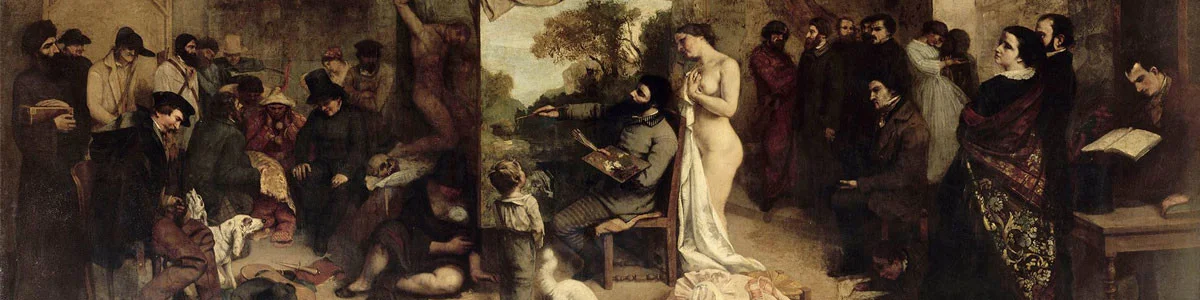
THE FLATTERING NOTION—fallacy, really—that artists see more than other, unpoetic, people comes to us from the Romantics. The German brand (Hegel, Schelling, Hölderlin, Schiller, Fichte and no small bit of Goethe) has been particularly virulent. Up to a point, of course, that bit about seeing has some merit. Down the centuries, artists were better than bakers, butchers, masons, et alia, at distinguishing one shade of gray from another, arranging colors in pleasing relation to each other, and gauging subtleties of line and hue. Continue Reading
THE RESURRECTION, from Matthias Grünwald’s Isenheim altarpiece, is the single most striking image of the event on which Christianity is founded. It dramatizes the center of the Christian mystery—and, correspondingly, the mystery of man. Neil MacGregor—art historian, director of the British Museum, and man of faith—responds to drama of the painting in his Seeing Salvation. (Published by Yale University Press, the book accompanied his 2000 television series by the same name.)  Standing in front of the altar, he says this:
Grünwald shows us what, according to the Gospels, nobody saw.
Continue Reading
“I WANT A SHORT LIFE BUT A FULL ONE.” Amedeo Modigliani got his wish. In 1920, at age thirty-five, he died, toothless, of tubercular meningitis in a Parisian pauper’s hospital. It was a sordid end to a confident stride into the trenches of la vie maudit. The romance of heroic nonconformity, vital to the cult of bohemia, absorbed the squalor and blessed it. Léopold Zborowski, Modigliani’s first dealer, declared him “made for the stars.” Clement Greenberg, writing under the pseudonym C. Continue Reading
I NEVER WATCH THE ACADEMY AWARDS, not necessarily out of scruple but because I can’t. There is no working TV in my house. (Part scruple, part laziness, on that point.) So I had no idea who James Franco was until I came across Joe Queenan’s description of him in The Weekly Standard:
For decades, Hollywood has been waiting for the full-service artiste—writer, director, producer, screenwriter—who can lay claim to the scepter of Renaissance Man once held by Orson Welles. Woody Allen couldn’t quite pull it off.
Continue Reading
WE KNOW ELIZABETH BISHOP (1911-1979) as a poet.  An eminent woman of letters, she was poet laureate of the United States (1940-50) at a time that title carried weight. Deeply private, she avoided publicity as well as the public, steered clear of academic and literary discourse. She deflected blatant biographical interpretations of her work, refusing to be pigeonholed as a “lesbian poet” or tucked neatly into the Woman Poet’s corner. In the words of a friend:
Elizabeth was a very private person.
Continue Reading
Subscribe To The Newsletter

Subscribe To The Newsletter

Join the Studio Matters mailing list for an occasional heads-up. Thank you.

You have Successfully Subscribed!

Premade image 14

Subscribe To The Newsletter

Join the Studio Matters mailing list for an occasional heads-up. Thank you.