Graphic design is a silent but powerful language. Instantaneously recognized, a single graphic is easily digestible. It serves as a branding device for more than your afternoon cuppa at Starbucks or a Ralph Lauren sport shirt. Applied to an ideology and a movement, it simplifies everything it stands for. It leapfrogs over complexities, contradictions, and muffles the noise of rational argument. Most significantly, it conveys an identity and, with that, a corresponding ethos.

Under Constantine, the Chi-Ro—standardized and emblazoned on the official banner of the Roman Empire—was disseminated throughout the known world as understood by Greeks and Romans at the time. Nowadays, such comprehensive recognition, martial spirit, and parallel respect accrue to the rainbow flag, global symbol of LBGTQ collective identity.
The rainbow flag is the official standard of a queer nation state. [Online magazine LBGTQ Nation is aptly named.] It exists wherever two, three, or more are gathered together to proclaim a shift of values away from the Judeo-Christian moral order. A transcendental commonwealth, it advances claims of normalcy for what had been considered abnormal even by the American Psychological Association until day before yesterday.
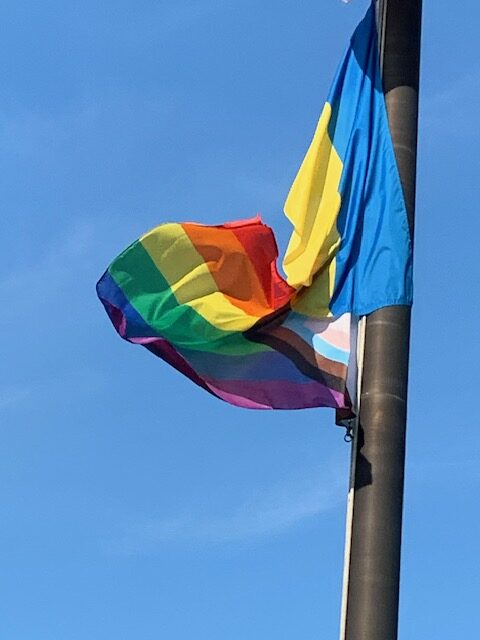
Ask any school kid in the developed world what a rainbow means, and you will hear: “It means Gay Pride.” [Note the uppercase G.] You might find a few with Irish surnames who heard tales about a leprechaun and a pot of gold at the end of one. But even these few know quite well what a rainbow really means. And that reality has nothing to do with God’s promise to Noah after the flood never to destroy man and his world by deluge ever again: “I set My rainbow in the cloud, and it shall be for the sign of the covenant between Me and the earth.”
Genesis is no longer on reading lists.
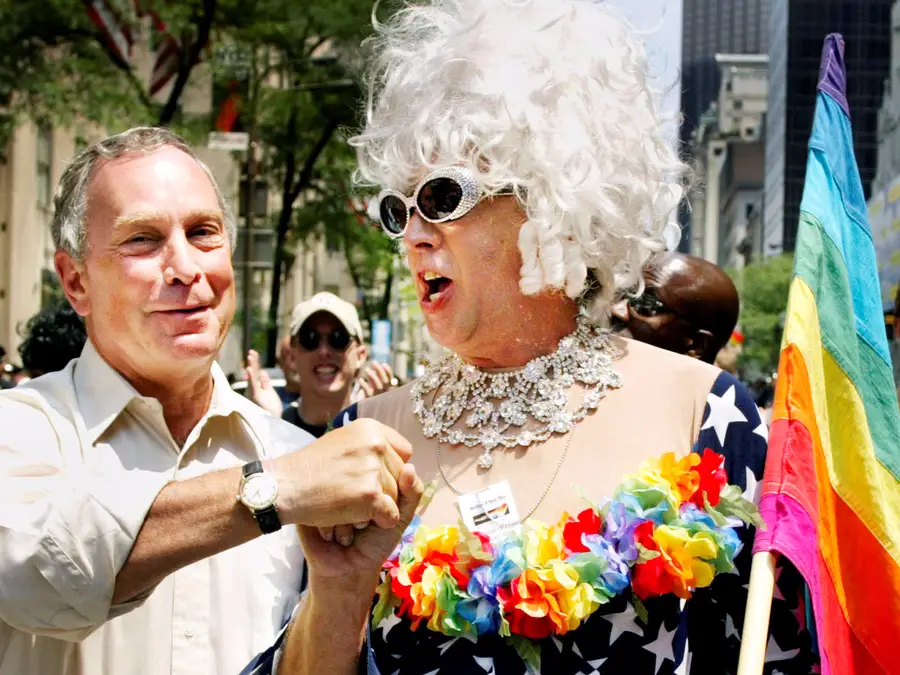
The rainbow as a celestial sign of God’s promise—the cosmic generosity of it—had been fading out of cultural mind for generations. Total eclipse began in the late 1970s. Harvey Milk, California’s first openly homosexual public official, thought the gay rights movement needed a logo. He urged graphic artist Gilbert Baker to create a distinguishing symbol for gays. Milk had a taste for underage boys; Baker was a drag queen and fellow traveler. Both were activists for normalizing homosexuality in all its varieties, and establishing homosexuals—male and female—as a class.
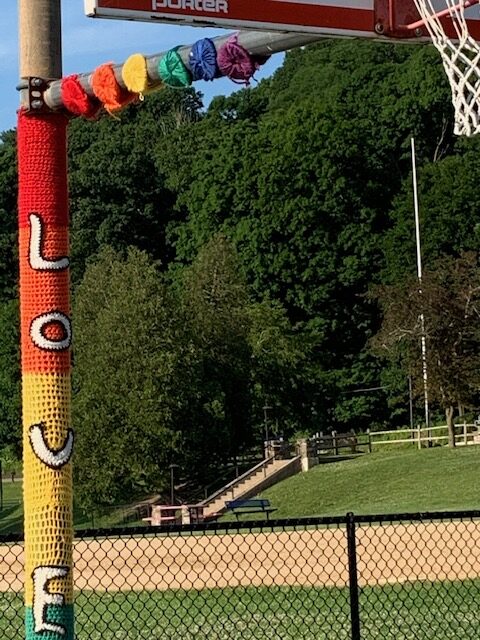
Baker chose a flag for his design because flags are a timeless emblem of identity. They have functioned as an distinguishing hallmark for different peoples—nations—throughout recorded history. Latent in every assertion of identity is pride and its confederate: demand for recognition. As recognition expands, public sanction follows. By now, the rainbow flag is as common, unproblematic, and inviting as a McDonald’s arch. Vivid, chromatically attractive, it makes itself noticed even in the midst of the visual clutter around us.
Its sheer eye-catching ubiquity evangelizes. Proclamation is in the air. The ever-present rainbow suggests an alternative code of morals, celebrates its alternativity, transmits its own revelations, and surrounds its own gospel with an aura of sanctity. [Leaving scuff marks on a rainbow crossing is pop blasphemy—and a felony in Washington State.] Taken together, the symbol and its dogmatic delivery assumed doctrinal authority far faster than did the Apostles Creed.
The General Directory for Catechesis, published by the Holy See, provides guidance on how the Church hands on the faith: “Catechesis is nothing other than the process of transmitting the Gospel, as the Christian community has received it, understands it, celebrates it, lives it and communicates it in many ways.” (#105) Substitute “LBGTQ community” for Christian community and you have an analogous sodality committed to missionizing.
Consider those rainbow crosswalks that are springing up on urban streets. Each one is an indirect but inescapable vehicle of catechesis. Token of a different kind of covenant, it declares the benign nature of homosexuality and integrates it into daily life. A homosexual life style is a bright spectrum of morally neutral choices on the smorgasbord of elective sexualities. Only bigots frown. As Richard John Neuhaus once quipped,”Moral judgment is the duty that dare not speak its name.”
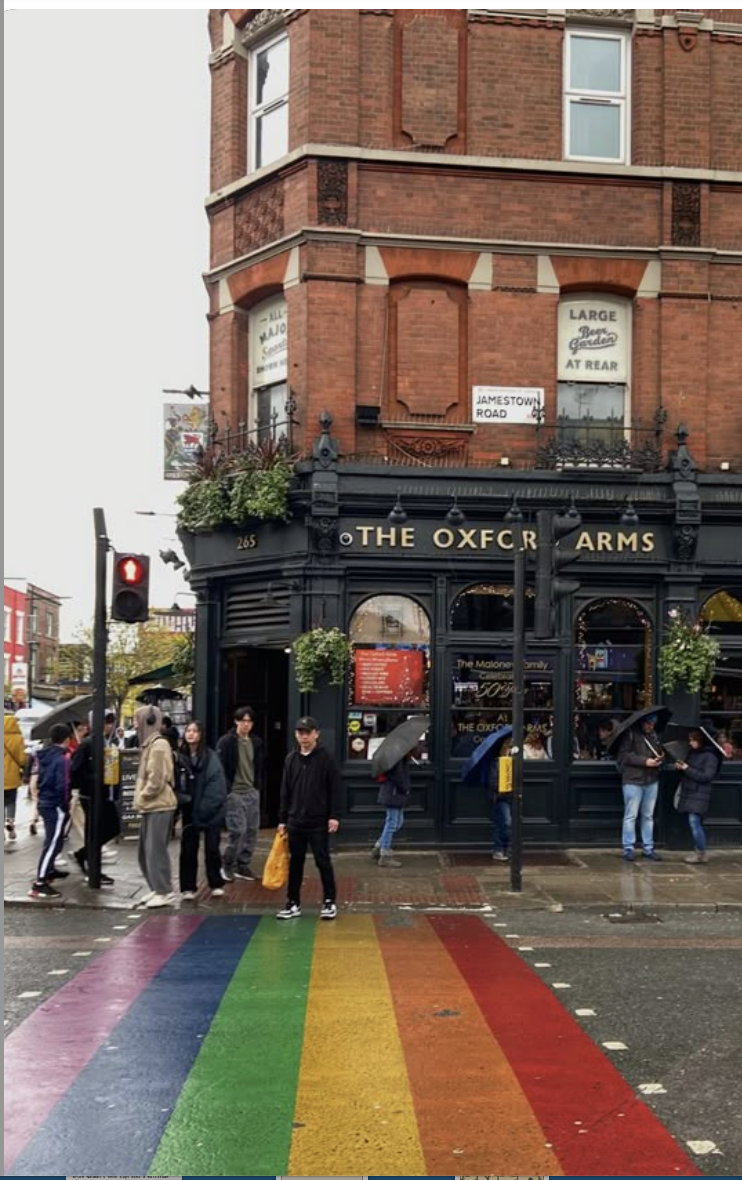
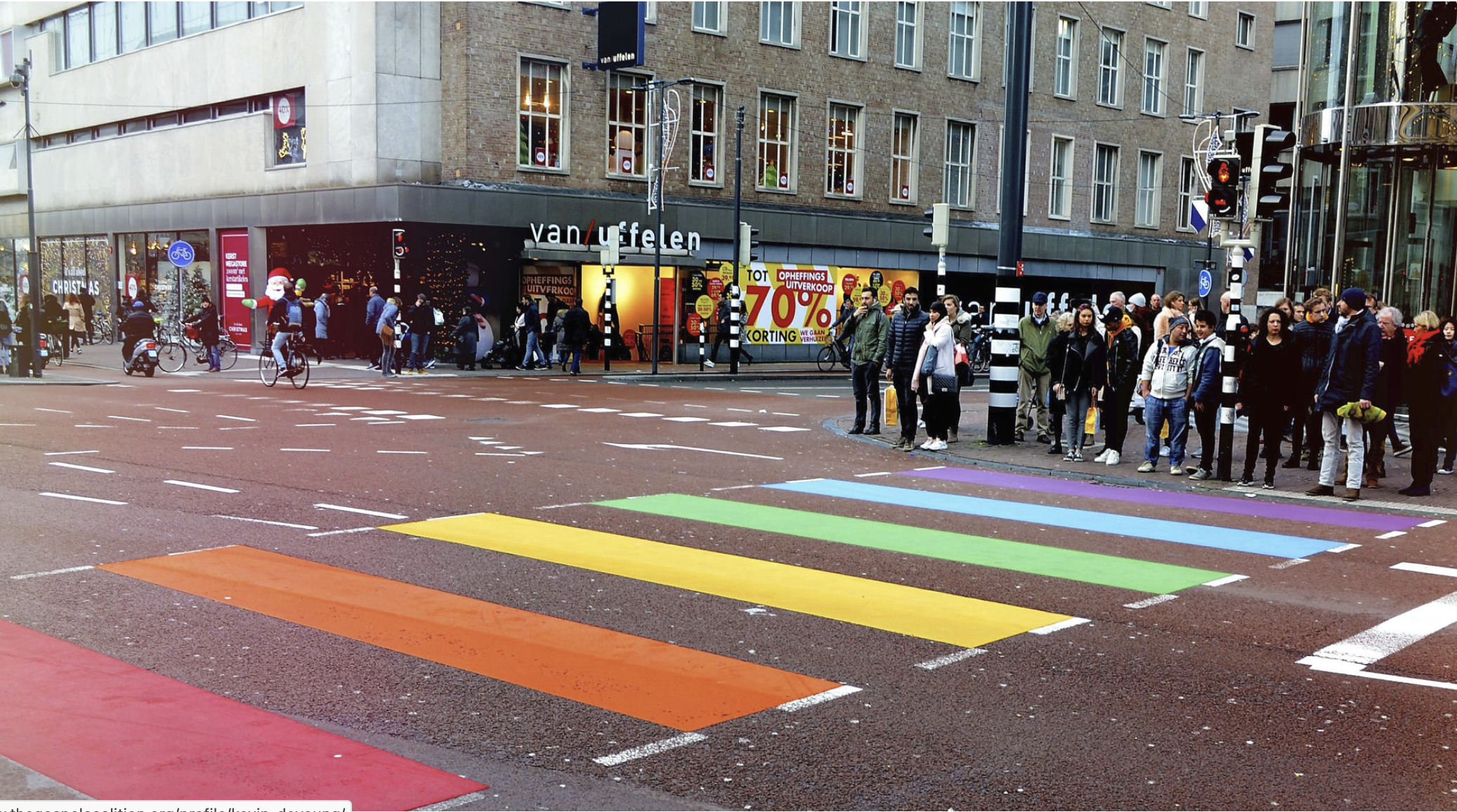
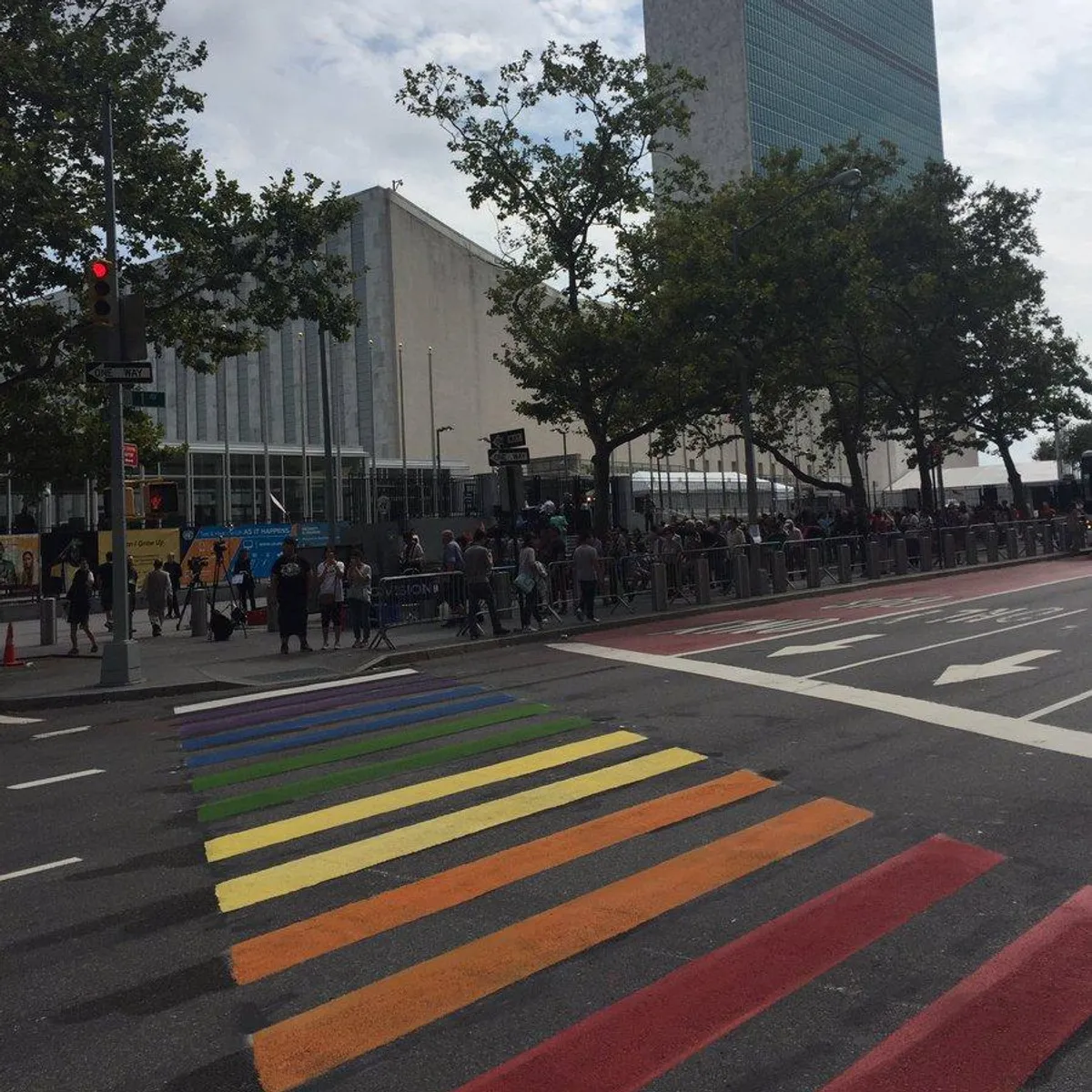
The pestering is relentless. There is instruction under foot. And overhead as well.
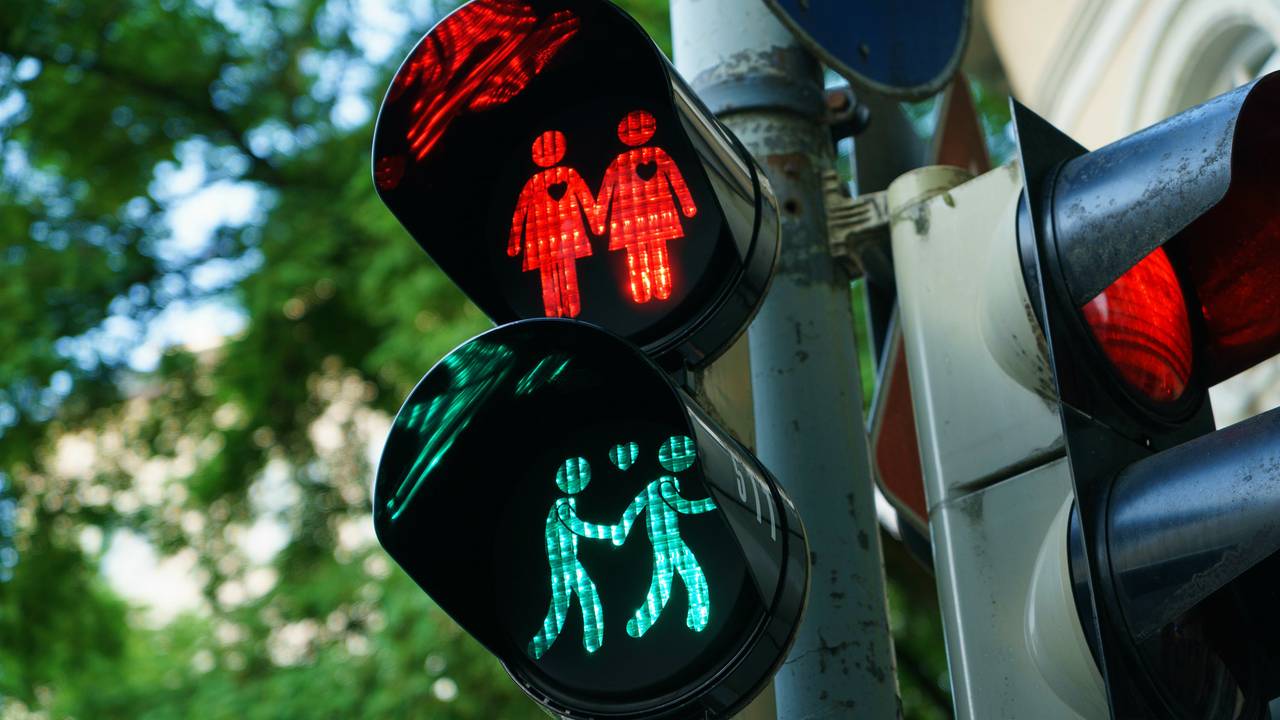
These insignia are not isolated phenomena. They are crafted products of what you might call the Confraternity of Queer Doctrine (CQD), a global network whose primary purpose is promotion of a positive image of homosexuality. Its influence extends from academia to city planning. With social justice sugar plums dancing in their heads, urban designers busy themselves with the idea of queering public space. Two British academics explain:
Most people might not usually think of public space as being gendered, but this is how scholars of the built environment increasingly talk about it. In many countries, the architecture profession is largely male and white. That results in a design approach that privileges the male perspective, from licensing regimes that favour heterosexual male drinking establishments to parks and sports facilities built for boys.
These assumptions about who the built environment should serve, as well as others such as the heterosexual, family oriented nature of suburbia, contribute to how it is designed. They can also affect how public spaces are experienced by women or men who don’t conform to masculine stereotypes.
Animus toward heterosexuality—particularly its white male exemplars and their familial touchstone—is thinly disguised by pretense to intellectual objectivity. Beneath the patina of academic politesse is rage against the existence of behavioral norms and, accordingly, the very concept of sexual normalcy.
Our credentialed scholars refer to “rising patterns of hate crime” as motivation for “‘queering’ public spaces.” Greater visibility for “marginalized groups” ignites a sense of purpose in gender-sensitive urban planners. Its social impact “might make the public realm more inclusive.” Hence, safer.
Appending the issue of safety for homosexuals to urban design is a cunning move. It reframes social issues by rationalizing homosexuals as a class in need of protection while simultaneously asserting assent and support to homosexual behavior.
The constant rainbow, a pervasive and ever bouyant icon, delivers stimuli that work beneath the brink of consciousness. The message: Gay is good. Gay is everywhere. Gay is here to stay.
In Making Gay Okay, Robert R. Reilly argued that what is a stake in the institutionalization of homosexuality is reality itself. His important book was published in 2014, just one year before the landmark Obergefell v. Hodges legalized the unreality of same-sex marriage. Reilly’s comment was prophetic:
Same-sex proponents insist that their unreality will not affect the reality of others. . . . but the denial of reality never remains partial. The unreal part is in tension with the real part, even if the two are not directly in contention on a specific issues. . . . To support itself, unreality must advance, or be advanced upon. Assertions of unreality are always aggressive—not because they are a negation of something, but because, like Napoleon, they must conquer to survive.
• • • • •
Today’s rainbow is an aggressive icon. In one respect, and one only, it befits the laissez faire, unrestricted sexual—and biological—cabaret that has made it a standard bearer. In all truth, by any rational and ordered measure, a rainbow is a meteorological phenomenon with no substantial corporeal reality. It is an optical illusion.

